Expert Answers
    Fire Safety
    1 August 2026Updated 15 September 2026

    Who is responsible for fire safety in an RTM block?

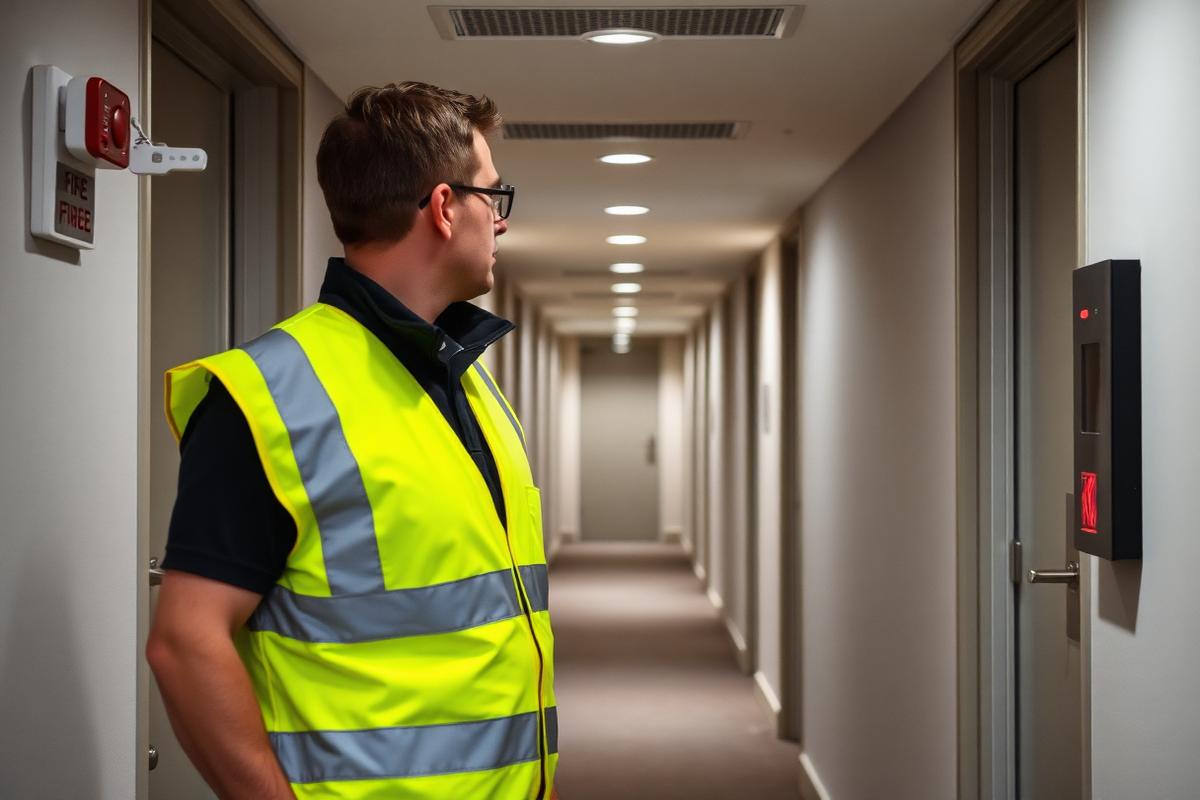
    Fire safety inspector checking a fire door and alarm point in a block corridor.
    The question

    A question we are asked regularly after a right to manage acquisition: now that the RTM company runs the block, who is legally responsible for fire safety - the company, the freeholder, or the managing agent?

    Short answer

    Where an RTM company has taken over responsibility for the common parts, it will usually be the responsible person for those areas under the Regulatory Reform (Fire Safety) Order 2005. Its duties include a suitable and sufficient fire risk assessment of the common parts, keeping it under review, maintaining general fire precautions and recording significant findings. The Fire Safety Act 2021 confirmed that the structure, external walls and flat entrance doors are within scope. Appointing a managing agent or fire risk assessor helps the company discharge the duty competently but does not transfer it. Higher-risk buildings carry additional duties under the Building Safety Act 2022.

    The duty follows control

    Fire safety responsibility in a block of flats is allocated by control, not by title. Under the Regulatory Reform (Fire Safety) Order 2005, the duty falls on the "responsible person", and in a residential block that generally means the person or body in control of the premises so far as the common parts are concerned.

    Where an RTM company has acquired the right to manage and has taken over responsibility for the common parts, it will usually be the responsible person for those areas. The individual flats behind their front doors are generally outside the Order's scope, although the front doors themselves, the structure and the common escape routes are very much within it.

    The Fire Safety Act 2021 confirmed that, where a building contains two or more sets of domestic premises, the Order applies to the building's structure, external walls, including things attached to them such as cladding and balconies, and to flat entrance doors.

    The managing agent does not take over the duty

    This is the point boards most often get wrong. Appointing a competent managing agent, or instructing a fire risk assessor, is a way of discharging the duty properly. It is not a way of transferring it. The Order can treat more than one person as having duties, and a person who has control to any extent can carry responsibility to that extent, but the RTM company does not stop being responsible because it has hired someone.

    Practically, that means directors should be able to answer three questions at any time: when was the fire risk assessment last reviewed, what actions remain outstanding, and who is doing them by when.

    What the responsible person has to do

    The core obligations are to carry out a suitable and sufficient fire risk assessment of the common parts, to keep it under review, to put in place and maintain general fire precautions, and to record the significant findings. In practice that translates into a familiar operational list: escape routes kept clear and usable; fire doors, including flat entrance doors, inspected and maintained; alarm and detection systems, emergency lighting and firefighting equipment serviced; signage and evacuation information appropriate to the building's strategy; contractor competence checked; and records kept.

    The Fire Safety (England) Regulations 2022 added further duties in multi-occupied residential buildings, with more extensive requirements for high-rise residential buildings, including information for residents, provision of information to fire and rescue services, and checks on fire doors and equipment. What applies to a particular block depends on its height and configuration, so this is one area where generic advice is genuinely unsafe.

    Higher-risk buildings

    For buildings that fall within the higher-risk category under the Building Safety Act 2022, there is an additional and separate regime, with accountable persons, a principal accountable person, registration with the Building Safety Regulator, a safety case and duties to engage residents. An RTM company that manages such a building will normally have accountable person duties and should take specialist advice early. These obligations sit alongside, not instead of, the Fire Safety Order.

    What good practice looks like in a small block

    Keep a current fire risk assessment with a live, dated action plan. Put the outstanding actions on every board agenda. Use assessors and contractors whose competence you have actually checked. Enforce the escape route and storage rules consistently, including with residents who object. Record decisions, including decisions to defer work and why. Budget for remedial actions rather than discovering them at year end. And do not let a change of managing agent break the chain: the fire risk assessment and its outstanding actions should be among the first documents transferred.

    The legal responsibility stays with the RTM company, but the inspection and record-keeping regime can be run by an agent. See our management service for RTM blocks.

    If your RTM or RMC manages the building directly, our Self-Managed Block Fire Safety Checklist sets out the recurring checks, records and follow-up to keep organised.
    Important qualifications

    • Responsibility under the Fire Safety Order follows control of the premises, so the position depends on what the RTM company actually took over.
    • More than one person can have duties in the same building, for example where a freeholder retains control of some parts.
    • The interior of individual flats is generally outside the Order, but flat entrance doors, structure and external walls are within it.
    • The Fire Safety (England) Regulations 2022 impose different requirements depending on building height and configuration.
    • Higher-risk buildings are subject to a separate Building Safety Act regime with accountable person duties; specialist advice is needed.

    Practical steps

    1. Confirm in writing which parts of the building the RTM company controls and therefore what it is responsible for.
    2. Obtain the current fire risk assessment and check when it was carried out and by whom.
    3. Convert the assessment into a dated action plan with named owners and target dates.
    4. Put outstanding fire safety actions on every board agenda until they are closed.
    5. Check the competence of the fire risk assessor and of contractors doing remedial work.
    6. Confirm which of the 2022 Regulations' duties apply to your building height and configuration.
    7. Establish whether the building is higher-risk under the Building Safety Act and take specialist advice if so.
    8. Budget for remedial works rather than treating them as unexpected costs.

    What this means in practice

    Fire safety responsibility is shared operationally but not legally; what to do depends on your role.

    If you are one of the rtm directors

    • Treat the fire risk assessment action plan as a standing board item, not an annual document.
    • Do not assume the managing agent has assumed the legal duty; ask for evidence of what has been done.

    If you are one of the freeholders

    • Clarify in writing which parts of the building you retain control over after an RTM acquisition.
    • Share historic fire safety records with the RTM company rather than withholding them.

    If you are one of the leaseholders

    • Report obstructed escape routes and damaged fire doors promptly and in writing.
    • Do not alter a flat entrance door without checking whether it forms part of the fire strategy.

    Common mistakes

    • Believing the managing agent has taken over the legal duty

      Delegation is a way of discharging the duty competently, not a way of transferring it away from the company.

    • Filing the fire risk assessment and not working the action plan

      An assessment with unaddressed significant findings is evidence of a known and unmanaged risk.

    • Treating storage in communal areas as a minor issue

      Escape route obstruction is one of the most common and most avoidable failings in small blocks.

    • Assuming general guidance covers your building

      Duties under the 2022 Regulations and the Building Safety Act depend on height and configuration; a generic checklist can miss them.

    When to seek professional advice

    Most questions on this topic are management questions rather than legal ones, and the two are worth separating. A managing agent can tell you how something works day to day and what it will cost. A solicitor tells you what your rights are and how a Tribunal is likely to view them.

    Speak to a managing agent when

    • Commissioning and diarising fire risk assessments and reviews.
    • Tracking and reporting the action plan so directors can evidence progress.
    • Checking contractor competence and keeping the compliance record complete.
    • Making sure fire safety records transfer intact when the agent changes.
    Request a free block review

    Take specialist legal advice when

    • A competent fire risk assessor for the assessment itself, which is not a managing agent function.
    • Specialist advice where the building may be higher-risk under the Building Safety Act 2022.
    • Fire engineering advice where the evacuation strategy or external wall construction is in question.
    • Legal advice following an enforcement notice, prohibition notice or fire authority intervention.

    East Valley Properties provides management expertise, not legal advice. Where a matter turns on the wording of your lease or on formal proceedings, we will say so and work alongside your solicitor.

    Primary sources

    The official material behind this guide. We summarise it in plain English rather than reproducing it.

    Need fire safety handled properly?

    Fire risk assessments, action logs and Building Safety Act duties managed as part of day-to-day block management rather than bolted on afterwards.

    Answered by Romain Maillard - Director, East Valley Properties

    Romain manages residential blocks and estates for RTM companies, residents' management companies, share of freehold developments and freeholders across East London and Essex.

    Published · Updated

    Based on the legislation and official guidance cited on this page.

    General property management information, not legal or professional advice. Where a decision depends on an individual lease, building, dispute or technical assessment, obtain specialist advice. See our editorial standards.

    This answer has been anonymised. Personal details, addresses and company names have been removed. Guidance is general and does not replace advice from a solicitor or surveyor on your specific block. East Valley Properties is a managing agent, not a firm of solicitors or legal advisers.

    Ask the Expert

    Have a Question About Your Building?

    Whether you're an RTM Director, RMC Director, Freeholder or Leaseholder, our experienced block management team is here to help.

    If your question could help other property owners, we may publish an anonymised version of the answer in our Knowledge Centre.

    0/3000

    We never publish personal information. Answers are always anonymised.

    Need advice sooner?

    Book a free consultation with East Valley Properties to discuss your building, service charges, compliance or managing agent requirements.