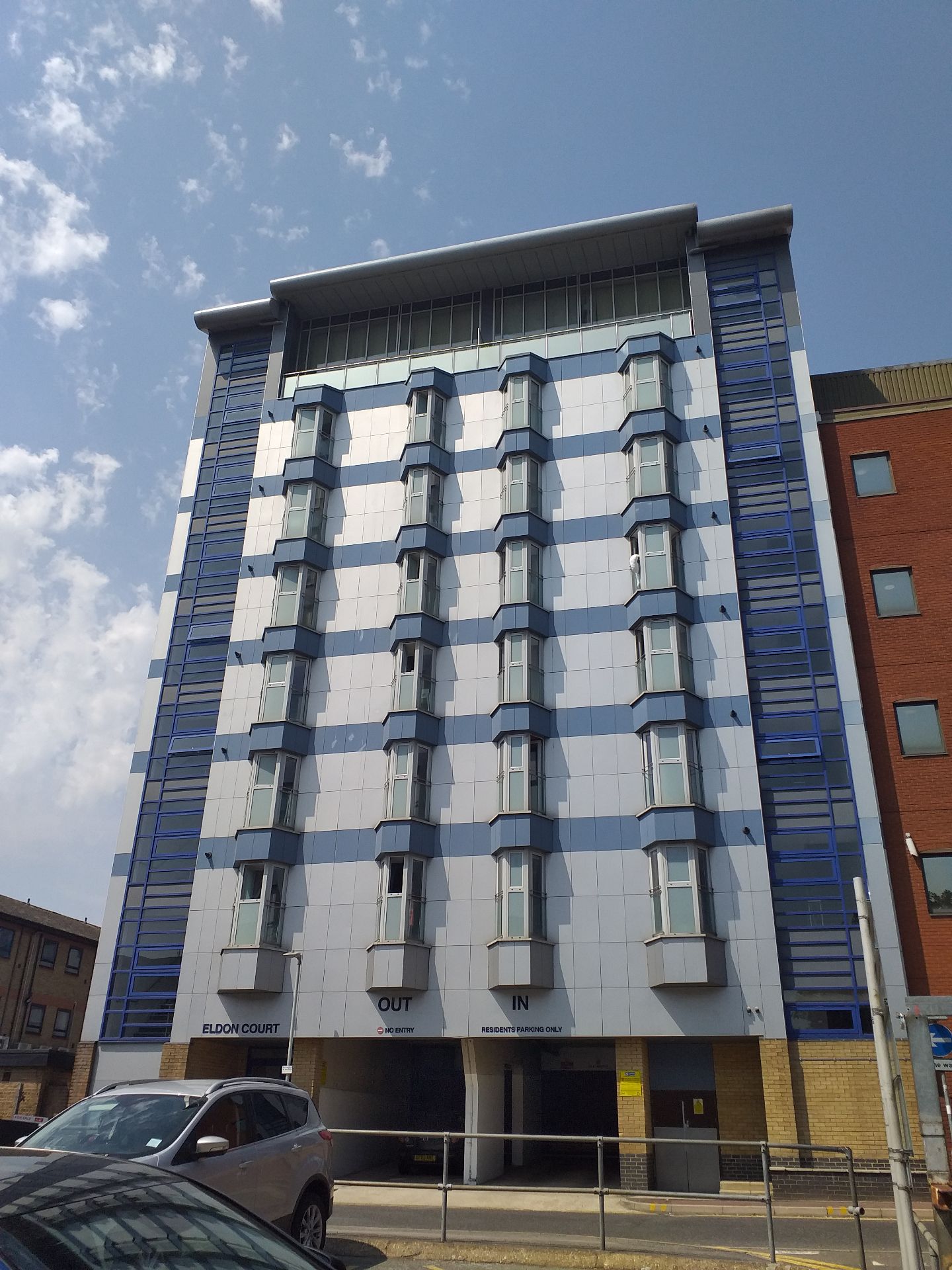
A major works bill can be a shock, particularly when the explanation amounts to “the building needed it”. But a large bill is not automatically unlawful, and a managing agent’s decision is not automatically reasonable simply because consultation notices were sent.
London Borough of Hounslow v Waaler [2017] EWCA Civ 45 explains how the reasonableness of major works service charges should be assessed. For leaseholders, RTM/RMC directors and freeholders in England, its practical message is to examine the lease, the options, the outcome and the people expected to pay.
What happened in Hounslow v Waaler?
Ms Waaler owned a leasehold flat on Hounslow Council’s IvyBridge Estate in Isleworth. Her building, Block U, contained 19 flats. The council undertook a substantial programme of works, including replacing a flat roof with a pitched roof and replacing wooden-framed windows with metal-framed units. The window replacement also required replacement of external cladding and removal of asbestos.
The notice in 2004 estimated Ms Waaler’s contribution at £61,134.01. Works to her block started in January 2005 and reached practical completion in May 2006. In March 2012 she received a demand for £55,195.95 - approximately £55,196.
The First-tier Tribunal initially found the charges substantially recoverable. The Upper Tribunal upheld recovery for the roof but treated the windows and cladding as improvements and allowed that part of her appeal. It sent the question of how much was recoverable back to the First-tier Tribunal. The council appealed; the Court of Appeal dismissed its appeal on 2 February 2017.
The Court did not declare the entire bill irrecoverable. The dispute concerned particular works and the approach to assessing their costs, not a blanket exemption from paying for major works.
Section 19: more than a reasonable-looking process
Section 19 of the Landlord and Tenant Act 1985 limits relevant service charge costs to those reasonably incurred. Where costs relate to services or works, those services or works must also be of a reasonable standard.
Start with the lease: does it authorise the work and recovery of its cost? Section 19 is an additional protection, not a substitute for that contractual question. An agent generally arranges works for the party responsible under the lease; appointing an agent does not remove the statutory protection.
In Waaler, the standard of the completed works was not disputed. The issue was whether their costs were reasonably incurred. The Court explained that this involves both process and outcome. Following an orderly procurement process cannot, by itself, justify an unreasonable result or an excessive price.
 Existing East Valley photograph - not the estate involved in Waaler.
Repairs and improvements: one test, different considerations
The same section 19 legal test applies to repairs and improvements within the service charge definition. However, the relevant circumstances can differ significantly.
Under the lease in Waaler, the council was obliged to repair but had discretion to make improvements. When fulfilling a repair obligation, a landlord cannot simply leave essential work undone because it is unpopular. When choosing optional improvements at leaseholders’ expense, it should give particular attention to their interests, views and the financial impact.
There is no bright line between repairs and improvements. Replacing an old component may both remedy a problem and improve performance. Major works are not all discretionary: the lease, condition evidence and purpose of each element matter. The Court described a spectrum of situations, rather than a rigid checklist that produces the same answer for every building.
Leaseholder views and financial impact matter
Consultation should be more than telling residents what has already been decided. The Court emphasised conscientious consideration of observations, with appropriate weight given to their substance. Leaseholders do not have a veto, but their views are not irrelevant to obligatory repairs either.
For optional improvements, questions about benefit and timing deserve particular attention. The remaining terms of the leases can also matter when considering leaseholders’ interests.
Financial impact is relevant in broad terms, including the scale of a demand and the consequences of substantial increases at short notice. Waaler did not require intrusive investigations into individual leaseholders’ finances. Nor does inability to afford a bill, by itself, make otherwise recoverable expenditure irrecoverable. It is one consideration in a fact-sensitive assessment, not an automatic defence.
Must the agent choose the cheapest quote?
No. There may be several reasonable ways to address a building problem. The Court said a reasonable outcome can remain reasonable even where another, cheaper reasonable outcome was available.
Directors should nevertheless compare like-for-like specifications. A lower price may exclude scaffolding, professional oversight or necessary associated work. Conversely, a higher quote needs an evidence-based explanation, not an assumption that expensive means better. Record why the chosen option is appropriate and whether the price is reasonable for its scope.
 Existing East Valley photograph illustrating residential block management, not the Waaler works.
Section 20 consultation is not a guarantee of reasonableness
Section 20 consultation and section 19 answer different questions. Compliance with the consultation requirements does not establish that every cost is reasonably incurred or that the lease permits recovery. A properly consulted project can still face a reasonableness challenge.
Leaseholders questioning a charge should ask for the specification, quotations, professional recommendations and the reasons for selecting the scheme. Disputed liability can be determined by the First-tier Tribunal (Property Chamber) under section 27A. Seek advice about your own lease and circumstances rather than treating Waaler as a reason simply to withhold payment.
A practical checklist for RTM and RMC directors
Before committing to major works:
- Check authority: identify the lease provisions for the works, recovery and allocation of costs.
- Separate the elements: distinguish necessary repairs from optional improvements, recognising overlap.
- Obtain evidence: commission appropriate condition advice and consider reasonable alternatives.
- Compare the full scope: assess quotations, exclusions, associated costs and professional fees together.
- Listen and respond: keep observations and explain how they influenced the decision.
- Consider financial impact: examine contribution estimates, reserves and timing without assuming hardship cancels liability.
- Record the outcome: minute why the specification, supplier and overall price are reasonable, and monitor variations and workmanship.
This is practical governance guidance, not a guarantee that a tribunal will approve a project.
East Valley’s transparent procurement approach
At East Valley Block Management, we do not take commission on insurance, communal utilities or any contractor work. That removes those commission incentives; it does not replace proper specifications, competitive comparison or reasoned decisions.
Our block management service supports clear budgeting and contractor coordination. When comparing agents, look beyond the headline fee: our management fees guide explains the wider costs and procurement questions to ask. If your board is planning major works, contact East Valley Block Management to discuss management support and a transparent approach to procurement.
Sources and legal information
- Court of Appeal judgment: Hounslow v Waaler [2017] EWCA Civ 45, especially paragraphs 1-8, 23-31 and 35-45.
- Tanfield Chambers’ case analysis.
- Landlord and Tenant Act 1985, section 19.
Legal information, not legal advice. This article concerns residential leasehold service charges in England. Recoverability depends on the lease, evidence and applicable law; building safety protections may also affect particular works. Obtain specialist legal and technical advice for an individual project or dispute.